Using KPLC Poles for Fiber the Right Way
Using KPLC Poles for Fiber the Right Way
Everyone is talking about how it is cheaper and faster to hang fiber on poles. No one is talking about the owner, the safety regulations, or your line being cut.
Guides
Contributor By:
Maxwell Kamau
24 Oct,2026, 7:34
When next you are in any town, look out for the poles that carry electric lines from one house to the other.
Some of the lines belong to larger telecoms, while others are from smaller independent operators. Using the poles is the cheapest and fastest way to lay fiber to a new housing estate, which is why most people use them.
However, the poles are not owned by you, and this is why most of the problems occur. The person or entity that owns the poles decides who installs what on the poles, who can access it, and who can remove it.
Running fiber on poles can be a good idea for a small operator if done responsibly and with caution.
Why the poles are a good option, and who is watching
Trenching is not only slow but also very expensive and requires permits. It also requires a lot of labor, ducts, and the risk of hitting underground pipes or fences. The poles are already there, running alongside roads and close to the houses that you want to connect. Stringing the cable along the poles is much faster and allows you to start selling sooner, which is way better for small ISPs that have limited funds.
The poles belong to Kenya Power, and they have announced their stance clearly. They have sent out a public notice prohibiting unauthorized networks from stringing cables along their poles. The notice also allows fourteen days for the unauthorized operators to remove their cables, presumably to avoid legal battles and disconnections by citing the violations. The reason given in the notice was safety clearances and preventing accidents.
In the same notice, Kenya Power announced that they have entered into lease agreements with approved operators to put their lines on the poles. This includes Safaricom, Airtel, Liquid Telecom, and Jamii Telecommunications, among others.
In simpler terms, you need to request permission from Kenya Power to use their poles to string your fiber.
County governments have also voiced their concerns. Nairobi City County has in the past months enforced the removal of fiber cables from the poles along major roads.
The reason given was lack of wayleave agreements and approvals. Kenya Power countered the demands by citing specific sections of the Energy Act, which prohibits any public agency from levying any charges or fees on energy infrastructure without the written consent of the Cabinet Secretary. The two government agencies had a legal battle over collections, and the operators got caught up in the middle and suffered outages.
The importance of safety cannot be emphasized enough
The pole is a very dangerous structure since the electric currents running through it can be very powerful. There is also a distance requirement between your cables and the power lines that must be respected.
Kenya Power’s notice cited unauthorized cables as the cause of several clearances violations and subsequent accidents on the road and in homes.
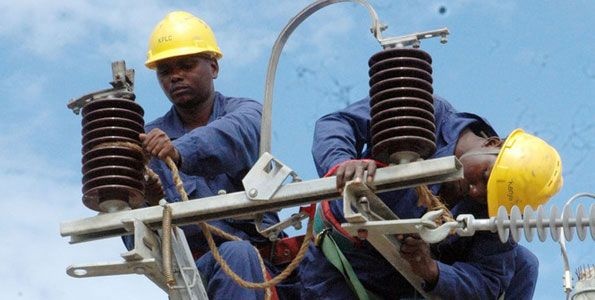
In other words, you should only allow authorized personnel to climb poles and work near the power lines. This means having a competent team of workers qualified to work on the poles. Usually this means a team employed directly by the pole owner. Your own team can climb a pole, but they should know what training, gear, and approvals are required to do so and what to do in case of an emergency.
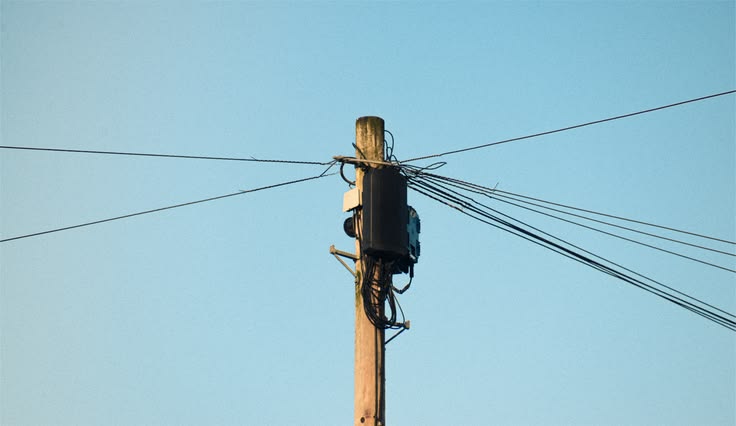
The cable to be used is also very important. Metal components on the cable can carry current to the ground or to people connected to it in case of fault or lightning, so you need to use all-dielectric cable that is rated for the job. Cables such as ADSS (all-dielectric self-supporting) are recommended. Ask your fiber and pole contractor and Kenya Power what options are available on the market. They will advise you on what to use depending on the type of pole and height and the distance between poles.
Clearance requirements are very important. A cable that sags too low can be pulled by vehicles and cause damage to the pole and the cables on it. Clearance requirements from the road, power lines, and structures should be followed strictly as stipulated by the pole owner. You should keep cables as tight as possible and observe height limitations. Windy weather, heavy vehicles, and falling tree branches can cause changes in the span length, so you need to regularly check the spans and ensure that the clearances are maintained.
The risks of using poles
Apart from the risks associated with underground cable, poles present additional risks such as vehicle collisions, pole replacements by utility companies, adverse weather conditions, and deliberate sabotage. County governments also conduct regular inspections and can order the removal of unauthorized cable.
Kenya Power has on several occasions issued notices to operators complaining of unauthorized installation of cables on their poles. One example of this happened recently in Nairobi City County in early 2025. Kenya Power has issued notices to several operators in the past demanding the removal of unauthorized cables and disconnecting those that failed to comply.
In the same way, thieves can also cut cable on poles, mistaking it for copper wire, or steal equipment on the pole.
Here is how to reduce the risk
Label your cable every few poles with your company name and a contact address or number so that any authorized official cutting the cable can contact you first. This will help in cases where the cable needs to be cut to replace a pole, for example. Having a record of all the poles you have climbed and the cable you have laid on them is advisable. This way, in case of a breakage or theft, you can locate the area easily. You can also conduct regular patrols on the route to check for faults or damage. Inspections should be done in cases where there have been adverse weather conditions and by utility companies working on poles in your route.
Having a written agreement on the terms and conditions of using the pole is very important. The agreement should be comprehensive and ideally, drafted by a law firm. The agreement should state the payment terms and method, the number of cables that can be laid on one pole and the maximum weight, who shall perform maintenance on the pole, the clearances and distances to be maintained at all times, the notice period in case of pole replacement, who covers the cost of relocating the cable in case of pole replacement, and who is responsible in case of damage, theft, or faults on either side. It is best to avoid working with anyone who is not willing to put the terms in writing.
Planning for failure
A pole route is cheaper to install but more expensive to maintain, so it is very important to factor in all the expenses and weigh them against the benefits. You need to factor in the installation costs and annual line rental fees in addition to the cost of authorized labor for repairs and the cost of downtime.
For example, if your route serves 150 customers who are paying KES 50 per day for internet access, a single day outage will result in loss of KES 7500 in revenue.
Request quotes for pole routes and trenching routes and compare them over a period of time to determine which is cheaper. Always consider the lifetime cost of owning a route rather than installation costs.
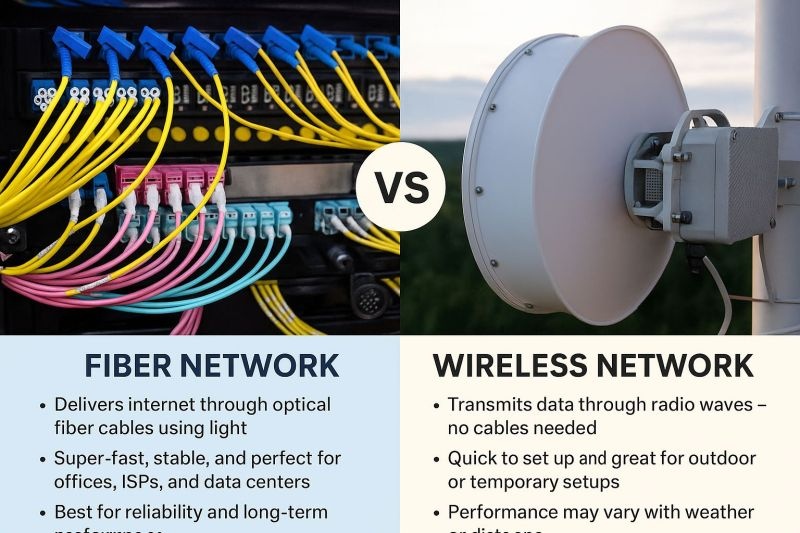
After doing the math, it is important to develop a contingency plan for the section of the route that is on poles. This could be in the form of a wireless backhaul to bypass poles, a 4G backup for selected customers, or a completely different route that is not on poles.
You need to have spares in case of breakage along the pole route. It is also advisable to have a plan for maintenance, such as who performs maintenance on the poles and at what speed. You could install notification software that will alert you whenever the fiber port goes down.
If you sell time-based passes, you need to determine how you will compensate your customers for the downtime and if your billing system allows for bulk adjustments.
Start earning today with Noch Wired
Popular Posts