Growing a Wi-Fi Business Next to Safaricom and Faiba
Growing a Wi-Fi Business Next to Safaricom and Faiba
When it comes to pricing, Faiba and Safaricom are unbeatable. You can still get clients that they have lost with day passes, quick setup, and a person that answers the phone.
Guides

Contributor By:
Maxwell Kamau
19 Oct,2026, 8:44
You will not beat Safaricom or Faiba on the price per megabit, and you should stop trying. They own the fibre, buy in bulk, and can drop prices unnoticed. A small Wi-Fi business that fights them on speed and monthly price dies slowly. One that sells something else to people that they do not serve well can do very nicely.
We are here to help you get a better understanding of exactly where the big ones are strong, where they leave gaps, and how to build packages to fill them.
Where you will lose
Start by looking at the numbers that they sell. Safaricom Home Fibre sells Bronze at 40 Mbps, Silver at 60, and Gold at 150, with a standard Bronze price near KES 2,999 and a promo price for new connections reported at KES 2,250. Faiba’s Home Plus plans run from 35 Mbps at KES 3,000 a month up to 1 Gbps, with plans in between aimed at families. Newer entrants such as Airtel and Savanna have pushed prices lower in some areas. Take a made-up comparison to feel the gap. If you sell 5 Mbps at KES 1,500 a month, that is KES 300 per Mbps. The reported promo for Bronze works out near KES 56 per Mbps. On raw speed per shilling, you are several times more expensive, and a customer that compares only those two numbers will leave.
They also have what you cannot copy quickly: a known brand, shops and agents, installation crews, and money to wait for customers to pay. Their service is built for people that want one reliable home connection for months or years, and for those people a fibre plan is usually the right answer. Be honest about that, both with yourself and with customers. Telling someone that wants 150 Mbps for a family of six to buy from you is a short road to a complaint.
Where they leave gaps
Big providers sell monthly plans, usually with an installation step, a router, some paperwork, and a wait. That leaves a huge amount of people out, and every group you can name below is a potential customer.
People with no coverage. Fibre only reaches where the cables run. Many estates, trading centres and rural areas have none, and the companies’ coverage lists favor larger towns. Check what reaches your exact location before you plan, since I cannot tell you that for yours.
People who want a day or an hour, not a month. A student who needs internet for assignments twice a week does not want a 30-day plan. Passes by the hour, day, or week suit them, and M-Pesa payments of KES 20 or 50 fit in their pocket.
People who cannot or will not commit. Tenants that move often, shop owners with uncertain months, and anyone who dislikes contracts and installation fees avoid fibre for good reasons.
Shared spaces. Hostels, eateries, salons, waiting rooms, and markets need internet for many people at once. One shared hotspot there makes more sense than a dozen separate home plans.
People who want a person to call. A neighbour that answers in minutes and speaks Swahili can beat a helpline in a queue.
People who want it now. Pay, connect, and browse in a minute, with no visit, no router delivery, and no waiting.
None of this makes the big providers bad. It means that they serve one kind of customer very well, and your job is to serve another.
A playbook that works against them
Sell by the day, not by the month. Short passes are your biggest advantage, because the large providers do not offer them in the same way. Price each pass so a casual user spends less than a monthly plan, and a heavy user clearly should buy fibre. If a customer uses you 12 days a month at KES 50, they spend KES 600, far below any monthly fibre bill. That is the customer you want.
Say what you are, plainly. Your pitch is not “faster” or “cheaper than Safaricom.” It is “pay only when you need it,” “no installation,” “connected in a minute," and “call me if it breaks.” Put those lines on your login page and your signboard. Do not criticize competitors by name, and make no claims you cannot prove. A short line comparing your passes to a monthly commitment is fair. A claim that a competitor is unreliable is risky, and customers distrust it.
Be reliable on the small things. Your edge is attention. Reply to messages quickly, fix problems the same day, keep your login page working, and tell people when you have an outage. Customers forgive slow speeds sooner than silence.
Match speed to what people really do. A 40 Mbps plan is wasted on someone who checks WhatsApp and reads email. Most shared-hotspot customers do well on 3 to 5 Mbps. Give each package a sensible cap, protect it with queues so nobody hogs the line, and avoid promising speeds your upstream cannot carry at 8pm.
Choose places the big providers skip or serve differently. A busy hostel, a rental plot where the landlord will host your equipment, a market with weak mobile data, or an estate where fibre stops at the gate. Walk the place, count the people, and ask what they pay now.
Think about working with them. Some owners buy a business line from a large provider and resell access locally. That can make sense where coverage exists, but check the line’s terms first, because many consumer plans forbid reselling.
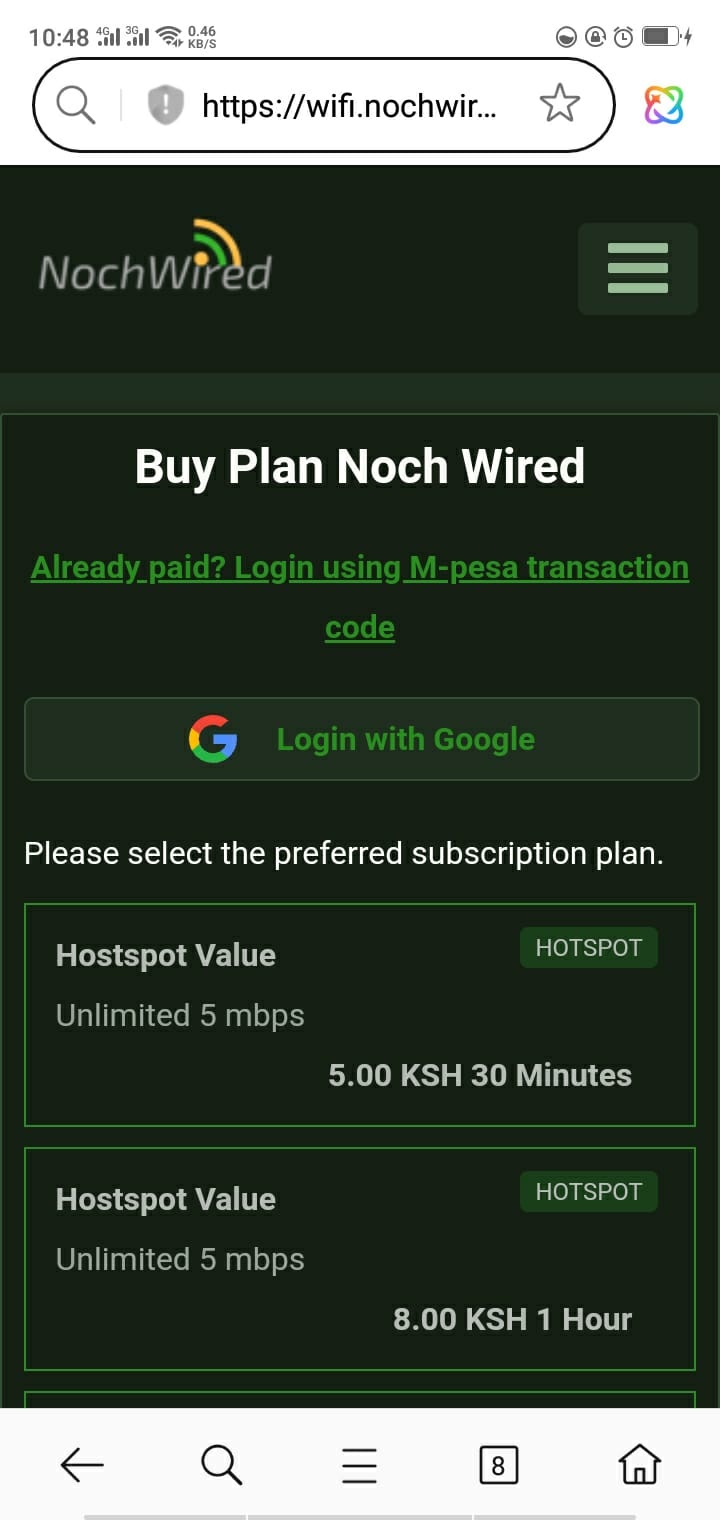
Make paying easy and automatic. Small payments only work when they take seconds. M-Pesa STK push on your login page, instant activation, automatic cut-off, and reminders for monthly customers keep your costs low and your customers happy. Noch Wired supports STK push, Paybill, and Till with hotspot and PPPoE billing on MikroTik routers, so the same setup can run daily passes and monthly accounts side by side.
What to tell the customer who asks, "Why not Safaricom?”
Keep your answer short and true. If they need heavy home use all month and fibre reaches their house, say that fibre may suit them better. If they want a few days at a time, no installation and no contract, say that your passes are made for that. People remember honesty, and a customer you sent elsewhere will often send others back to you.
You don’t need a perfect plan. You only need one good spot. Pick a place where lots of people stand around on their phones, like a hostel gate or a market stall. Spend one afternoon there and count how many of them there are. Then make three passes: an hour, a day and a week. Set the prices so people feel it’s fair, and so you still make a little money.
Before you open, pay for one pass yourself and see if the internet comes on. You need a billing system for that, and Noch Wired has a free trial if you want to test with it. If your own payment works, a customer’s will too. If it doesn’t, you fixed it before anyone saw.
Start earning today with Noch Wired
Popular Posts